(Idea 22.com)
Alan Hibben CPA, CFA ICD.D
If you’ve ever wondered why UK energy bills keep climbing despite all the talk of “cheap renewables,” you’re not alone—and you’re not wrong. The darling metric of policymakers and think tanks, the Levelized Cost of Electricity (LCOE), has become the go-to justification for wind and solar expansion across the country. It’s neat, it’s numerical, and it’s misleading. It is why the ratepayer is quietly footing the bill.
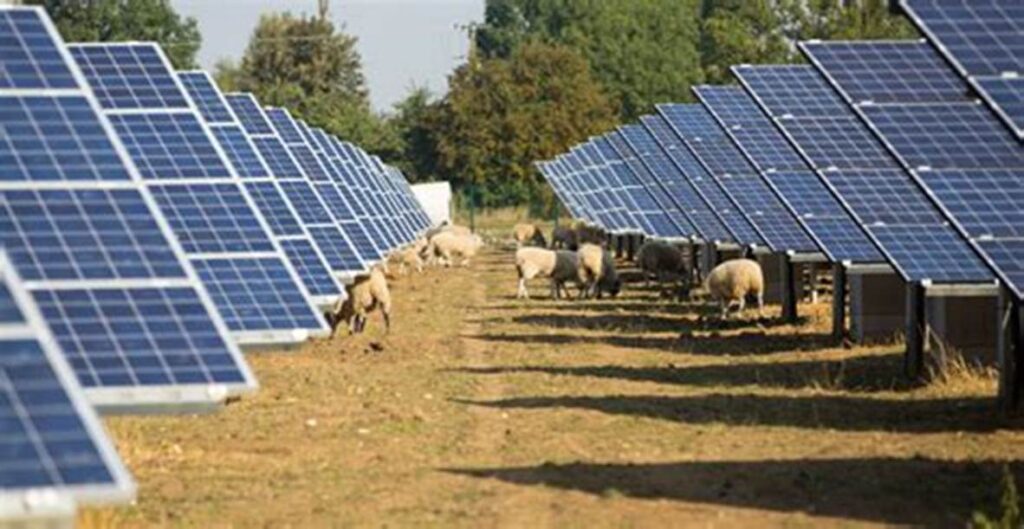
Our little North Yorkshire village is in a tizzy because of a proposal for a local solar farm on land that is otherwise farmed for zero net return. Obviously, the discussion is over how “ugly” the solar farm might be and how its not in keeping with the character of the village (which you would think from the discussion has not changed since the 1700’s). Many of the correspondents on the local chat group preface their objections with “Of course I am in favour of solar, BUT…”. As an aside, if you ever want some deep anthropological research as to why the UK is in trouble, ask someone to share the village chat group.
Part of the reason for the free pass given to solar (and wind as long as we can’t see it) is that governments of all stripes have pointed to the lower cost of solar and the obvious carbon benefits – how could you not be in favour. In pointing to the lower cost, in order to seem more scientific and sophisticated, governments and think tanks will point to the LCOE or “Levelized Cost of Electricity”. They may compare solar and wind in terms of LCOE to gas or nuclear and low and behold, it seems cheaper. LCOE has the advantage of sounding reassuringly scientific while hiding all manner of awkward truths.
LCOE was meant to simplify hard choices. The implication: all we need is more panels and turbines and soon Blackpool will shine like Las Vegas, powered by cheap, green electrons.
Unfortunately, as with most four-letter words these days, this one has colonized the energy debate in ways that actively undermine both affordability and reliability. Not because anyone set out to fool the public, but because, as so often in policymaking, few have an incentive—or the public’s patience—to explain why these numbers don’t add up in the real world.
What LCOE Leaves Out (And Why You’re Paying for It)
The unpleasant truth is that the ratepayer is already picking up the tab for everything LCOE doesn’t count. Consider just a few unpleasant facts from the UK’s recent experience:
- Balancing Costs: National Grid spent £2.7 billion last year just keeping the lights on and the frequency stable—triple the rate a decade ago. This is not a glitch, it is a feature of high-renewables systems. The more wind and solar, the more you pay for the privilege of keeping them integrated. On your bill, this shows up as the charmingly opaque BSUoS (Balancing Services Use of System ) charge (~£3/month for the average household).
- Constraint Payments: The grid wasn’t built for a world where two-thirds of Scottish wind seeks refuge in the English southeast. Result: in 2025, we’ll pay up to £1.8 billion to wind farms—to NOT generate. This is roughly the GDP of Rutland, shelled out to hit the “off” switch on clean power.
- Back-up and Capacity: Here’s a riddle. What happens when everyone runs the tumble dryer at 6pm during a wind lull in February—on a grid built for wind and solar? Turns out, someone needs to keep a few deeply unfashionable gas or nuclear stations around, just in case. Last winter’s capacity auction set a record at £65/kW/year. In consumer language: you’re covering the cost of redundant capacity, so the lights don’t splutter out when the weather doesn’t co-operate.
Why Is This Happening? See Also: Political Gravity
Policymakers love LCOE. It’s flat, it’s comparable, and it gives the (false) impression that technologies are plug-and-play substitutes. But wind at £50/MWh is not the same as nuclear at £90 or gas at £60. Electricity isn’t like potatoes: when you need it, you really need it.
Thus, we commit sacrificial billions to new capacity while quietly ladling even more into the gruel behind the scenes—balancing, curtailing, subsidizing, and firefighting. This is not strictly the fault of any one minister, regulator, or lobbyist—it’s how the system incentivises what’s easy to sell and obscures the bits that don’t fit the Twitter thread.
But Isn’t Renewables Integration Supposed to Get Cheaper?
It’s a comforting story, but the reality is less cheerful. Studies commissioned by NESO and others show that every additional percentage point of wind and solar tacked onto the UK grid increases “integration costs”—the (formerly) missing extras like balancing, back-up, and grid upgrades. The best guesses: an extra £10–£25/MWh when renewables approach 50% of annual generation. That’s on top of the headline-grabbing LCOE.
To put it in terms that would terrify focus groups: wind and solar get more expensive to society as their share rises—unless, of course, we want to pay for massive overbuild and simply toss surplus generation away, which is what we’re increasingly doing. The mechanism that is used to transfer value from ratepayers to project proponents. The actual mechanisms are best set out on the website of the Low Carbon Contracts Company. Contracts for Difference – Low Carbon Contracts. Up to now these have been 15-year contracts but are moving to 20-year contracts in the future. Importantly, these appear to be take and pay contracts where if the power is produced, it must be paid for. There is no real adjustment for any other “state of the grid” issues.
The Rest of the Story
If you visit the world of actual markets, this is slowly being recognised. Zonal pricing, system value assessments, “value-adjusted” LCOE—these are all names for the same awkward realisation that “not all MWh are created equal.” While these acronyms are likely better than LCOE as they price in some of the externalities to pure energy production, they are still incomplete. The only real solution is to model the grid before and after a set of projects, run the model 10,000 times with variations in demand, wind, sun, capacity, imports etc. etc. and then see what the trade off might be between marginal cost and reliability. These methods are not conducive to political soundbites. I would note that while not all parts of the grid need to have “five-nines” reliability (5 minutes of grid downtime per year) in total, it should.
In recent capacity auctions, bids have skyrocketed as the reliability penalty gets priced in. Regulators are experimenting with new signals to force value into the system: if you can produce when no one else can, you’re paid handsomely; if you simply add more megawatts to a sunny afternoon, they’ll probably pay you to bugger off until sunset. The grid, in other words, is catching up faster than the politics.
The Real Five-Letter Test: BSUoS
To summarize: LCOE is a bit too much like the three words you can’t say in UK policy circles (“We Can’t Afford”), so we all keep pretending that balancing, reliability, and backup are someone else’s problem—or at least someone else’s cost. But the bills are now arriving—and, despite all the talk, they’re not going down.
If “value-adjusted cost” or “system value” makes your eyes glaze over, remember this: in electricity, there really is no such thing as a free lunch. Eventually, you pay for reliability, even if you don’t see it in the headlines. In the UK, this cost comes through the BSUoS charges, which since April of 2023 has been paid by ratepayers.
One day, the political adults in the room will acknowledge that making true comparisons in energy means pricing not just the shiny new toys, but the boring parts—the spare tyres, the jumper cables, the tow trucks (and yes, the billions in curtailment payments). Until then, expect the gap between promise and bill to keep growing. In recent years, the lie has been extended to “building renewables creates good well-paying middle-class jobs”. Maybe, but the cost per job may be more than everyone is likely to admit.
The secondary issue (for another day perhaps) is that the over-pricing of energy in the UK WILL (if it hasn’t already) lead to a reduction in energy intensive businesses, or the need for businesses (such as data centres) to build their own gas plant back-ups. Otherwise, these businesses will have to locate elsewhere in the world, along with their jobs and value-add.
So, the next time someone says wind or solar is “cheaper,” ask them where they’ve buried the balancing costs and whether you—ordinary ratepayer—are footing the bill. Spoiler: you are.